 Chat with us
 Download Brochure
  Mon-Sat 9.00 AM to 6.00 PM




 Send Inquiry
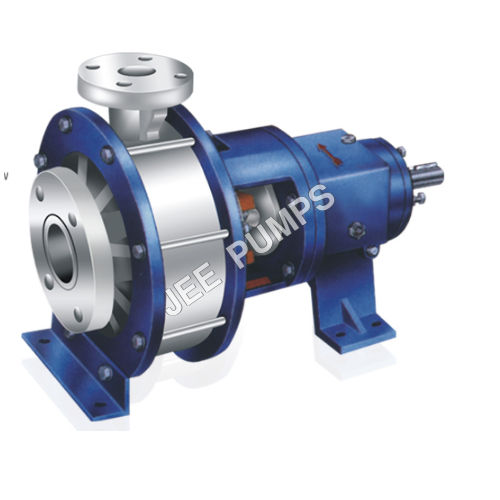
Industrial Gland Less PP Pump
MOQ : 01 Set
Industrial Gland Less PP Pump Specification
- Inlet/Outlet
- 25 mm x 25 mm to 75 mm x 75 mm
- Theory
- Centrifugal Pump
- Discharge Pressure
- Up to 3 Bar
- Head Size
- Upto 28 Mtr
- Caliber
- Standard
- Control System
- Manual / Automatic
- Frequency
- 50 Hz
- Flow Rate
- Upto 36 m³/hr
- Noise Level
- Low
- Mounting Type
- Horizontal Base Mounted
- Max Suction
- 3 Meters
- Speed
- 2900 RPM
- Working Temperature
- Up to 80°C
- Material
- Polypropylene (PP)
- Structure
- Single Stage
- Power
- 0.5 HP to 7.5 HP
- Standard
- ISO 2858
- Fuel Type
- Electric
- Pressure
- Up to 3 bar
- Usage
- Industrial
- Application
- Acid Transfer, Chemical Process, Effluent, Electroplating, Water Treatment
- Suction Type
- Positive Suction
- Seals Type
- Gland Less / Seal Less
- Priming
- Self Priming
- Pump Type
- Gland Less PP Pump
- Capacity
- up to 36 m³/hr
- Cooling Method
- Ambient Air Cooled
- Max Particle Size
- Up to 8 mm
- Paint Coating
- Epoxy Coated
- Shaft Sleeve
- SS 304 / Ceramic
- Color
- Blue / Custom
- Drive Type
- Direct Coupled
- Bearing Type
- Heavy Duty Ball Bearing
- Protection Class
- IP55
Industrial Gland Less PP Pump Trade Information
- Minimum Order Quantity
- 01 Set
- Supply Ability
- 50 Sets Per Month
- Delivery Time
- 1 Days
About Industrial Gland Less PP Pump
Leveraging on immense support of our adroit professionals, we are instrumental in manufacturing, supplying and exporting high grade Gland Less PP Pump. The pump offered by us is designed in our advanced infrastructural unit in strict compliance with global quality parameters. Owing to its high capacity and longer operational life, our pump is highly demanded in national and international market. Available in various capacities and specifications, our Gland Less PP Pump is extensively being used in effluent treatment plants, electroplating applications, transferring of gases & caustic fluids and textile industry.
Features :-
- Low power consumption
- Compact design
- High rust resistance
- Minimal maintenance
Applications:
- Excellent for transfer and loading and "unloading like HCL, Sulphuric Acid/Alkali,
- Caustic liquid
- Scrubbing of corrosive gases like NH3, CO2, SO2, L2, F2, Br2, CI2, etc,,,,
- For handling liquids in various like textile, paper, cellulose, sugar, steel, food, having,
- Temperature range, materials etc.
Advantage :-
- No. 1 choice for effluent treatment plant since there are no mechanical seals / glands.
- Can run dry due to absence of shaft seals
- Few parts facilities maintenance.
Operating Data :-
- Capacity : Up to 50 m3/hr
- Head : Up to 45 Mtr.
- Discharge Size : 25 mm to 50 mm
- Temperature : 80C
- Speed : Up to 3500 RPM
- Pressure : Up to 4.5 kg/cm2
- M.O.C. : PP, UHMWPE
Efficient and Safe Fluid Handling
Designed for a wide spectrum of industrial uses, this glandless PP pump ensures the secure transfer of corrosive and hazardous fluids with minimal maintenance. The seal-less construction eliminates common leakage issues, while heavy-duty bearings extend operational life. Suitable for applications like acid transfer or water treatment, this pump provides consistent performance and preserves product purity.
Corrosion-Resistant and Durable Construction
Manufactured from high-grade polypropylene, the pump offers excellent resistance against aggressive chemicals and industrial effluents. The shaft sleeve, available in SS 304 or ceramic, further enhances chemical compatibility, making this solution ideal for harsh operating environments. The epoxy-coated exterior and IP55 protection class provide added reliability in challenging settings.
FAQs of Industrial Gland Less PP Pump:
Q: How does the glandless (seal-less) design benefit industrial operations?
A: The glandless design eliminates the need for mechanical seals, reducing maintenance and the risk of leakage, which is crucial for handling corrosive or hazardous chemicals. This makes the pump safer and more reliable for continuous industrial use.Q: What types of fluids and particles can this PP pump handle?
A: This pump is specifically designed to handle corrosive chemicals, acids, effluents, and electroplating solutions. It can process fluids containing particles up to 8 mm in size, making it suitable for a range of industrial applications.Q: When is it necessary to use the self-priming feature of this pump?
A: The self-priming feature is particularly useful during pump start-up or in applications where the suction line is not initially filled with liquid. It ensures the pump can automatically prime itself without manual intervention, facilitating easier operation.Q: Where can the Industrial Gland Less PP Pump be installed?
A: This pump is ideally installed in industrial settings such as chemical plants, water treatment facilities, electroplating stations, and acid transfer units. Its horizontal base-mounted structure is designed for stability and easy maintenance in diverse environments.Q: What is the process for routine maintenance of this pump?
A: Routine maintenance generally involves checking the bearings, ensuring the shaft sleeve (SS 304 or ceramic) remains intact, verifying the condition of the epoxy coating, and keeping the ambient cooling system unobstructed. The glandless design significantly reduces overall maintenance requirements.Q: How does the pump control system operate?
A: This pump supports both manual and automatic control systems, providing flexibility based on user requirements. Manual operation is suitable for on-the-spot adjustments, while automatic controls are ideal for continuous or process-integrated applications.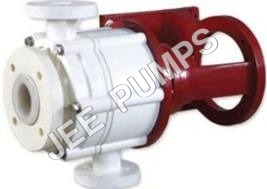
Tell us about your requirement

Price:
Quantity
Select Unit
- 50
- 100
- 200
- 250
- 500
- 1000+
Additional detail
Mobile number
Email

More Products in Industrial Polypropylene Pumps Category
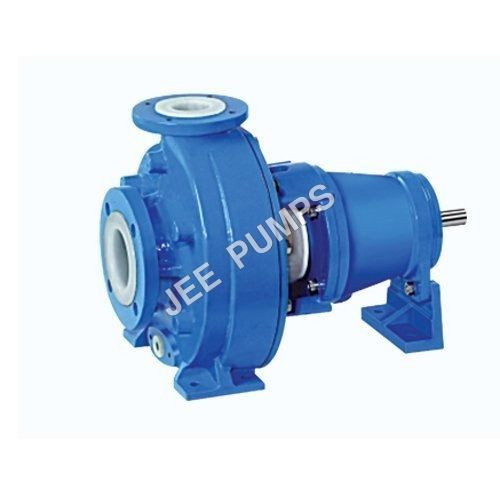
Industrial HCL Acid Pump
Price 45000.00 INR / Set
Minimum Order Quantity : 01 Set
Frequency : 50/60 Hz
Structure : Other, Horizontal, Singlestage
Max Suction : 3.5 m
Speed : 2800 RPM
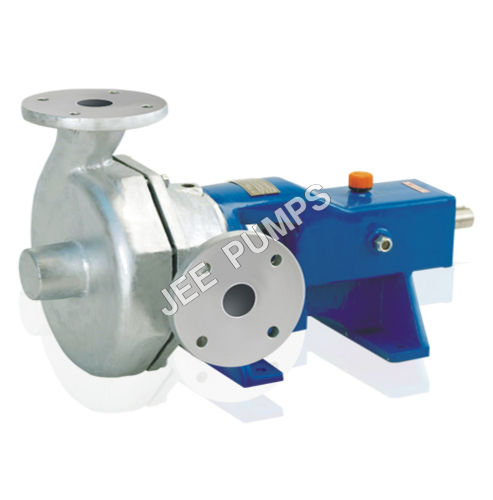
Industrial Long Shaft PP Pump
Price 22000.00 INR / Set
Minimum Order Quantity : 01 Set
Frequency : 50 Hz
Structure : Other, Single Stage
Max Suction : 6 meters
Speed : 2900 RPM
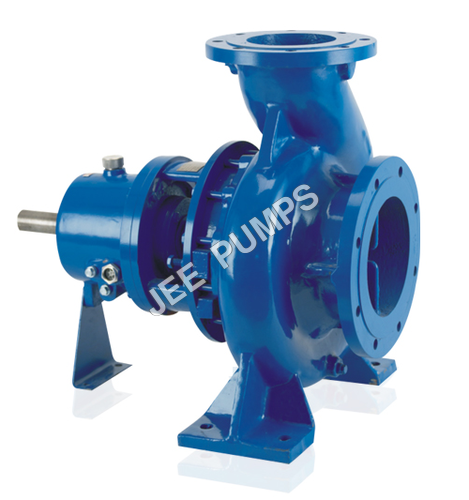
Industrial Fluid Transfer Pump
Price 35000.00 INR / Set
Minimum Order Quantity : 01 Set
Frequency : 50/60 Hz
Structure : Other, Singlestage
Max Suction : 7m
Speed : 2900 rpm
Industrial PP Pump
Price 22000.00 INR / Set
Minimum Order Quantity : 01 Set
Frequency : 50/60 Hz
Structure : Other, Singlestage Horizontal
Max Suction : Up to 3 meters
Speed : 2800 RPM

"We do not entertain inquiries from resellers."
Contact Us

- Plot No. L-1 & 2, Near Water Tank, G.I.D.C. Estate, Odhav, Ahmedabad - 382415, Gujarat, India
- Phone : 08045813503
JEE PUMPS LIMITED
D&B D-U-N-S Number : 67-639-0351

- Mr Prakash (Director)
- Mobile : 08045813503
- Send Inquiry
- Toll free number :1800-233-8787
 Send Inquiry
 Send Inquiry
 Send SMS
 Call Me Free
JEE PUMPS LIMITED
All Rights Reserved.(Terms of Use)
Developed and Managed by Infocom Network Private Limited.
Developed and Managed by Infocom Network Private Limited.


